Buying a condo in Florida isn’t like buying a single-family home, and getting mortgage approval reflects that reality immediately. Lenders evaluate not just you as a borrower, but the entire condo project: HOA financial health, owner-occupancy ratios, litigation status, reserve funding, and flood zone exposure. Miss one of these, and your loan can be denied even with a perfect credit score and solid income.
Florida’s market adds another layer of complexity. Post-Surfside legislation under Florida Statute 718.112 introduced milestone structural inspection requirements that lenders now factor into project eligibility decisions. FEMA flood zone overlays affect insurance costs and DTI calculations. And coastal markets from Miami-Dade to Pinellas frequently produce non-warrantable projects that eliminate conventional loan options entirely.
This guide covers the brokers and lenders best equipped to navigate Florida condo mortgage approval requirements in 2026, from warrantable and non-warrantable projects to VA-approved complexes and high-rise buildings. If you want to protect your credit while comparing options, a no hard inquiry mortgage pre-approval process can show you what you qualify for before you commit to anything.
What Lenders Actually Review Before Approving a Florida Condo Loan
Before diving into the list, it helps to understand that condo mortgage approval involves two separate underwriting decisions running simultaneously. The first is your personal file: credit score, income, debt-to-income ratio, and assets. The second is the building itself.
For conventional loans, Fannie Mae and Freddie Mac require that at least 51% of units be owner-occupied, that no single entity owns more than 10% of units, that HOA reserves are funded at a minimum of 10% of the annual budget (per Fannie Mae Lender Letter LL-2022-01), and that the HOA is not in active litigation. Florida’s coastal condo market, where short-term rental activity through platforms like Airbnb is common, frequently pushes owner-occupancy ratios below these thresholds, making conventional financing unavailable.
Florida also has no state income tax, which is a genuine financial advantage for condo buyers. Because state income tax withholding doesn’t reduce your gross income, your debt-to-income ratio is naturally better than a borrower with identical earnings in a state like California or New York. For condo buyers specifically, this matters because HOA dues are included in your monthly DTI calculation, and Florida’s income tax advantage can meaningfully offset that added obligation. You can model this using the CFPB’s mortgage calculator to see how HOA costs interact with your overall housing payment.
Here’s a quick reference for how loan type affects condo project requirements:
Loan Type | Min Down Payment | Condo Project Requirement | Min Credit Score | Florida Note
Conventional (Fannie/Freddie) | 3-5% | Warrantable: 51%+ owner-occupied, reserves funded, no litigation | 620+ | Post-Surfside questionnaire adds deferred maintenance disclosure
FHA | 3.5% | FHA-approved list OR spot approval | 580+ | Spot approval allows non-listed buildings; 35% FHA concentration cap applies
VA | 0% | VA-approved condo list | 500+ (lender overlay varies) | Separate VA approval process; Fannie-warrantable does not equal VA-approved
Non-Warrantable Portfolio | 10-20%+ | No agency requirement; lender’s own criteria | 620-680+ typically | Higher rate; used for litigation buildings, low owner-occupancy, or unfunded reserves
Now, here are the brokers and lenders best positioned to help you navigate these requirements in Florida.
1. Florida Mortgage Maestro
Best for: Florida condo buyers who need warrantable, non-warrantable, or VA loan options without a hard credit inquiry
Florida Mortgage Maestro is a Florida-licensed mortgage broker serving clients statewide, with access to hundreds of lenders and a NoTouch Credit soft-pull process that lets condo buyers check eligibility without a hard inquiry hitting their report.
Where This Tool Shines
The core advantage here is breadth. Because Florida Mortgage Maestro operates as a broker rather than a single retail lender, it can shop hundreds of lenders simultaneously, including portfolio lenders who accept non-warrantable condo projects that a bank with one investor relationship simply cannot finance. For Florida condo buyers, where a building might fail Fannie Mae’s warrantability test due to investor ownership ratios or an HOA dispute, this access to alternative investors is often the difference between a closed loan and a dead deal.
The NoTouch Credit process uses Vantage Score 4.0 for an initial eligibility check, meaning your credit report is not impacted while you’re still comparing buildings and loan scenarios. This is particularly valuable in Florida’s condo market, where a buyer might be evaluating three or four buildings with different project eligibility profiles before committing. Florida’s no-income-tax environment also means your qualifying income stretches further here than in most states, and an experienced broker can model that accurately across multiple lender scenarios.
Key Features
NoTouch Credit (Vantage Score 4.0): Soft-pull eligibility check with no hard inquiry and no credit impact, allowing condo buyers to compare options freely.
Hundreds of Lenders Simultaneously: Broker access includes portfolio lenders for non-warrantable condos, giving options where retail lenders hit a wall.
VA Loan Navigation: VA-capable with condo project navigation support, including guidance on VA’s separate approval process distinct from Fannie Mae warrantability.
Cash-Out Refinance to 90% LTV: Condo owners can access equity at higher LTV thresholds than many competitors offer.
Florida-Specific Expertise: Post-Surfside statute knowledge, FEMA flood zone familiarity, and HOA documentation experience built into every condo review.
Best For
Florida condo buyers comparing multiple buildings or loan scenarios, borrowers whose target building may be non-warrantable, veterans navigating VA condo approval, and condo owners considering a cash-out refinance. Also well-suited for first-time buyers who want guidance rather than a purely digital self-serve experience.
Pricing
No upfront fees for consultation. Broker compensation is disclosed at application per federal RESPA requirements. Shopping hundreds of lenders means rate comparisons are built into the process.
2. Movement Mortgage
Best for: Borrowers who want in-house underwriting and faster condo project review timelines
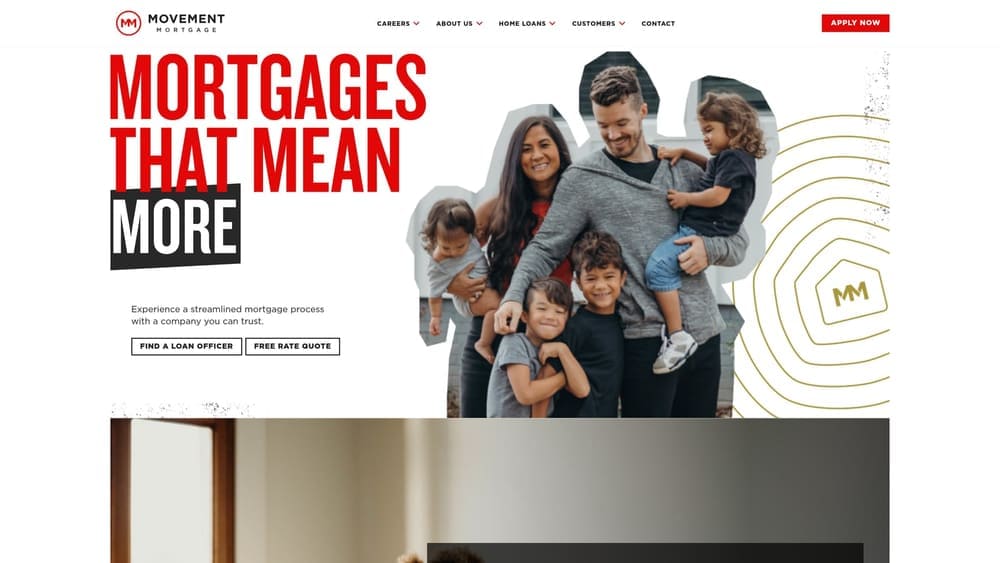
Movement Mortgage is a retail lender with in-house underwriting that can accelerate condo project review decisions for conventional, FHA, VA, and USDA borrowers.
Where This Tool Shines
Condo mortgage approvals often slow down at the project review stage, not the borrower review stage. When a lender outsources underwriting, condo project questionnaires and HOA document reviews can sit in queues for days. Movement’s in-house underwriting model keeps that review internal, which can meaningfully compress timelines when a seller has a hard closing deadline.
Movement also has Florida branch presence, which matters for condo buyers who want face-to-face guidance when working through HOA documentation or understanding post-Surfside inspection disclosures. Their structured condo project review process follows agency guidelines consistently, making them a reliable choice for buyers in established, warrantable Florida condo communities.
Key Features
In-House Underwriting: Condo project review stays internal, reducing delays that commonly occur when project approval is outsourced.
Multi-Product Platform: Conventional, FHA, VA, and USDA loan products available under one roof.
Florida Branch Presence: In-person support available for borrowers who prefer it during the HOA documentation review process.
Structured Condo Review: Consistent application of agency condo project eligibility guidelines across loan types.
Best For
Buyers purchasing in warrantable Florida condo communities who need a faster-than-average close timeline, and borrowers who value in-person support during the document-heavy condo approval process.
Pricing
Rate and fee disclosure at application. Pricing varies by loan type, borrower profile, and market conditions.
3. Rocket Mortgage
Best for: Tech-comfortable buyers purchasing in established, warrantable condo communities
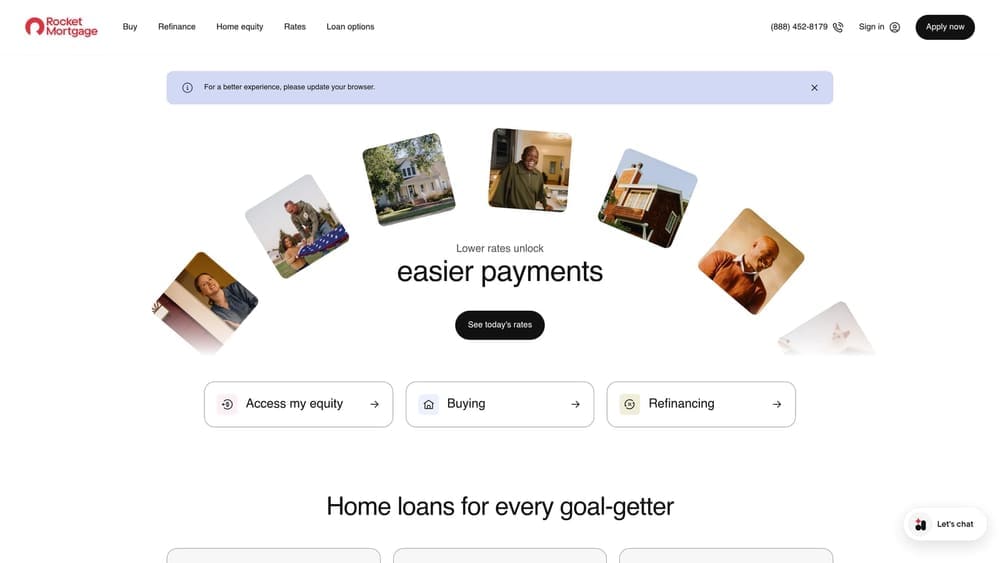
Rocket Mortgage is a high-volume direct lender with a digital-first application and a built-in condo eligibility lookup tool, best suited for buyers in Fannie Mae and Freddie Mac-warrantable projects.
Where This Tool Shines
If your target condo community is already warrantable and you’re comfortable managing a mortgage application through a digital interface, Rocket’s platform is genuinely efficient. The proprietary condo eligibility lookup tool lets buyers check whether a specific project is already in Fannie Mae’s or Freddie Mac’s approved database before going deep into the application, saving time when the building is a known quantity.
The tradeoff is flexibility. Rocket operates as a direct lender with a single investor relationship, which means non-warrantable projects, buildings with ongoing HOA litigation, or complexes with underfunded reserves are largely outside what they can accommodate. For Florida’s coastal condo market, where non-warrantable situations are common, this is a meaningful limitation.
Key Features
Condo Eligibility Lookup: Proprietary tool within the application platform to check whether a project is already agency-approved.
Fully Digital Application: End-to-end digital process for borrowers who prefer self-service.
Strong Agency Alignment: Well-suited for Fannie Mae and Freddie Mac-warrantable condo projects with clean HOA profiles.
Conventional and FHA Products: Standard loan product range for eligible projects.
Best For
Buyers purchasing in well-established, warrantable Florida condo communities who are comfortable with a digital-first process and don’t need portfolio or non-warrantable loan options.
Pricing
Rate and fee disclosure at application. Digital platform allows relatively quick rate comparison within their product offerings.
4. Veterans United
Best for: Veterans and active-duty service members navigating VA condo project approval
Veterans United is a VA loan specialist and one of the highest-volume VA lenders nationally, with dedicated support for the VA condo project approval process, which operates entirely separately from conventional warrantability.
Where This Tool Shines
Here’s something many buyers don’t realize: a condo building can be fully Fannie Mae-warrantable and still not be on the VA-approved condo list. VA maintains its own project approval database at VA.gov, and the approval criteria differ from agency standards. Veterans United’s team understands this distinction and can assist with submitting unapproved condo projects for VA review, which is a meaningful service when a veteran has identified a building they want but it isn’t yet on the VA list.
VA financing offers 0% down payment for eligible borrowers, which is a significant advantage in Florida’s condo market where purchase prices in desirable coastal areas can be substantial. Florida’s no state income tax also improves DTI for VA borrowers, since their gross income isn’t reduced by state tax withholding, helping them qualify for higher loan amounts than equivalent borrowers in high-tax states.
Key Features
VA Condo Project Expertise: Deep familiarity with the separate VA condo approval process, distinct from Fannie Mae or FHA requirements.
Project Submission Support: Can assist with submitting unapproved condo projects for VA review, expanding eligible building options.
0% Down Financing: VA loan benefit applied to approved Florida condo projects with no down payment requirement.
VA Education Resources: Dedicated resources for veterans navigating condo-specific VA loan questions.
Best For
Veterans, active-duty service members, and eligible surviving spouses purchasing Florida condos who want VA financing and need support navigating the VA’s separate condo project approval process.
Pricing
VA funding fee applies and varies by down payment amount and whether it’s a first or subsequent use of the VA benefit. Lender fees disclosed at application.
5. Hometown Lenders
Best for: Florida condo buyers who want regional familiarity with access to multiple investors
Hometown Lenders operates as a mortgage broker/banker hybrid with Florida branch locations and access to multiple lender investors, offering more flexibility than a single-investor retail lender for certain condo project situations.
Where This Tool Shines
The hybrid model matters here. Because Hometown Lenders has access to multiple investors rather than a single agency relationship, they have some ability to route condo files to investors with different project eligibility standards. This can be useful in Florida markets where a building doesn’t cleanly meet one investor’s criteria but might qualify with another.
Their Florida branch presence also means agents develop regional familiarity with local HOA documentation practices and condo market patterns, which can smooth the project review process compared to a purely national platform with no local context.
Key Features
Multiple Investor Access: Broader condo project eligibility options compared to single-investor retail lenders.
Florida Market Presence: Regional familiarity with Florida HOA structures and condo documentation norms.
Multi-Product Range: Conventional, FHA, and VA loan products available.
Branch-Level Service: Personalized support at the branch level for borrowers navigating complex condo approvals.
Best For
Florida condo buyers in markets where a single-investor retail lender would struggle, and borrowers who value regional familiarity combined with some investor flexibility.
Pricing
Rate and fee disclosure at application. Broker compensation varies by lender selected and is disclosed per RESPA requirements.
6. The Mortgage Firm
Best for: Florida condo buyers who want a Florida-only broker with deep HOA documentation expertise
The Mortgage Firm is a Florida-based mortgage broker operating exclusively in the state, with agents who are familiar with Florida HOA documentation requirements, condo association structures, and the post-Surfside regulatory environment under Florida Statute 718.112.
Where This Tool Shines
Florida-only focus is a genuine differentiator in the condo mortgage space. Agents who work exclusively in Florida have seen the HOA documentation patterns, the reserve study formats, the milestone inspection disclosures, and the condo questionnaire responses that come back from Florida associations regularly. That familiarity reduces friction at the project review stage compared to a national platform where a Florida condo file might be a less common scenario.
The Mortgage Firm’s familiarity with Florida Statute 718.112 milestone inspection requirements is particularly relevant in 2026, as buildings continue to work through Phase 1 and Phase 2 inspection timelines. Lenders are increasingly scrutinizing deferred maintenance disclosures and special assessment status, and a broker who understands what those disclosures mean in context can help borrowers navigate them more effectively.
Key Features
Florida-Only Footprint: Agents specialize exclusively in Florida condo and HOA documentation, with no learning curve on state-specific requirements.
Florida Statute 718.112 Familiarity: Working knowledge of milestone inspection requirements and how they affect lender project review decisions.
Multiple Lender Relationships: Broker model provides condo project flexibility across multiple investors.
Full Product Range: Conventional, FHA, and VA loan products for eligible condo projects.
Best For
Florida condo buyers in buildings with complex HOA documentation, recent milestone inspection activity, or special assessment disclosures that require an agent who understands the Florida-specific context behind those documents.
Pricing
Rate and fee disclosure at application. Broker compensation disclosed per RESPA requirements.
Frequently Asked Questions About Florida Condo Mortgage Approval
What is a warrantable condo and why does it matter for mortgage approval?
A warrantable condo is a project that meets Fannie Mae’s and Freddie Mac’s eligibility criteria: at least 51% owner-occupied units, no single entity owning more than 10% of units, HOA not in active litigation, and reserves funded at a minimum of 10% of the annual budget. Warrantable status determines whether conventional financing is available. Non-warrantable projects require portfolio loans, which typically carry higher rates and larger down payment requirements.
What HOA documents does a lender need to approve a condo mortgage?
Lenders typically require a completed condo project questionnaire (CPQ) from the HOA, the most recent HOA budget, reserve study or reserve fund balance, HOA meeting minutes (often 12-24 months), master insurance certificate, and any pending litigation disclosures. For Florida buildings subject to Florida Statute 718.112, lenders are also increasingly requesting milestone inspection reports and documentation of any special assessments related to structural repairs.
What owner-occupancy ratio is required for a conventional condo loan?
Fannie Mae generally requires at least 51% of units to be owner-occupied for conventional purchase financing. For second home or investment property purchases, the threshold can be higher. Florida’s coastal condo market, where short-term rental activity is common, frequently produces projects below this threshold, pushing buyers toward non-warrantable portfolio loan options. If you’re purchasing a Florida condo as a second home, owner-occupancy ratio requirements are worth verifying early in your search.
How does VA condo approval work, and is it different from Fannie Mae approval?
Yes, VA condo approval is entirely separate from Fannie Mae warrantability. The VA maintains its own approved condo project list at VA.gov. A building can be Fannie-warrantable and not VA-approved, or VA-approved but not warrantable. Veterans should verify their target building’s VA approval status before proceeding, and work with a VA-specialized lender who can assist with submitting unapproved projects for VA review if needed. The process is governed by the VA Lenders Handbook, Chapter 16.
Can I get FHA financing for a condo that isn’t on the FHA-approved list?
Yes, through HUD’s Single Unit Approval (spot approval) process, reinstated via HUD Mortgagee Letter 2019-06. Spot approval allows FHA financing for individual units in non-FHA-approved projects if the project is at least 85% complete, no more than 35% of units are FHA-insured, and the project meets basic financial and physical condition standards. You can search the FHA-approved condo list at HUD’s condo lookup tool. Spot approval is a meaningful option for Florida buyers in buildings that haven’t pursued full project approval.
How does flood insurance affect my condo mortgage DTI in Florida?
Florida condos in FEMA Special Flood Hazard Areas (zones A and V) require flood insurance, typically through the NFIP or a private flood insurer. For condos, the HOA usually carries a master flood policy on the building structure, but lenders may require individual unit coverage depending on the loan type and master policy terms. Post-NFIP Risk Rating 2.0, flood insurance premiums have increased significantly for coastal Florida properties. These costs can affect your monthly housing payment and DTI calculation. Verify your building’s flood zone at the FEMA Map Service Center. Florida’s no state income tax helps offset this: your gross income isn’t reduced by state tax withholding, giving you more qualifying power to absorb flood insurance costs within your DTI.
Does Florida Statute 718.112 (the milestone inspection law) affect my ability to get a mortgage?
It can. Following the Champlain Towers South collapse in Surfside, Florida enacted legislation now codified under Florida Statute 718.112, requiring milestone structural inspections for condo buildings three stories or higher that are 30 or more years old (25 years if within three miles of the coast). Fannie Mae and Freddie Mac updated their condo project questionnaires to require disclosure of deferred maintenance and special assessments. Buildings with unresolved structural findings or unfunded special assessments are increasingly difficult to finance through conventional channels. A broker familiar with these disclosures can help you assess a building’s financing risk before you fall in love with a unit.
Can I check my condo mortgage eligibility without a hard credit inquiry?
Yes. A soft pull mortgage broker consultation, like the NoTouch Credit process used by Florida Mortgage Maestro, uses Vantage Score 4.0 to check your eligibility without a hard inquiry and without any impact to your credit report. This is especially useful for condo buyers who are still evaluating multiple buildings with different project eligibility profiles. A mortgage pre-approval without hard pull lets you understand your qualifying range and loan options before you commit to a specific building or application, which protects your credit score during the comparison phase.
Making the Right Choice for Your Florida Condo Purchase
Condo mortgage approval in Florida involves two parallel underwriting decisions: your personal financial profile and the building itself. The right broker or lender understands both, and knows how to navigate Florida’s post-Surfside inspection laws, FEMA flood zone overlays, HOA reserve requirements, and the warrantable/non-warrantable divide that determines which loan products are even available to you.
For most Florida condo buyers, the decision comes down to what kind of building you’re targeting. If your building is warrantable and well-established, options like Rocket Mortgage offer a streamlined digital process. If you’re a veteran, Veterans United’s dedicated VA condo approval support is worth prioritizing. If your building is non-warrantable, or you’re still comparing multiple projects, you need a broker with portfolio lender access, not a retail lender with a single investor relationship.
Florida’s no state income tax is a genuine advantage throughout this process. Your qualifying income isn’t reduced by state tax withholding, which improves your DTI and helps absorb the HOA dues that are included in every condo mortgage calculation. Combined with Florida Statute 196.031‘s Homestead Exemption, which reduces assessed value by up to $50,000 for primary residences (applied in the tax year following your purchase), Florida condo ownership carries real long-term affordability advantages worth modeling before you shop. Use tools like the mortgage affordability calculator to see how HOA dues, flood insurance, and property taxes interact with your total housing payment.
For most Florida condo buyers, the smartest first step is a no-touch credit pull consultation that checks your eligibility without a hard inquiry. Florida Mortgage Maestro’s NoTouch Credit process uses Vantage Score 4.0 to do exactly that, giving you a clear picture of your loan options across hundreds of lenders before you commit to a building or an application.
Get your credit-safe consultation today and discover the loan options that fit your life, backed by trusted guidance every step of the way.